English Version
Free Exploration, Inclusive Listening, Simple Sincerity
A Dialogue on Improvisational Expression and the Development of Folk Music
Wu Wei, Kui Dong, Hong Wang, Na Zang (edited by Na Zang)
Editor’s Note
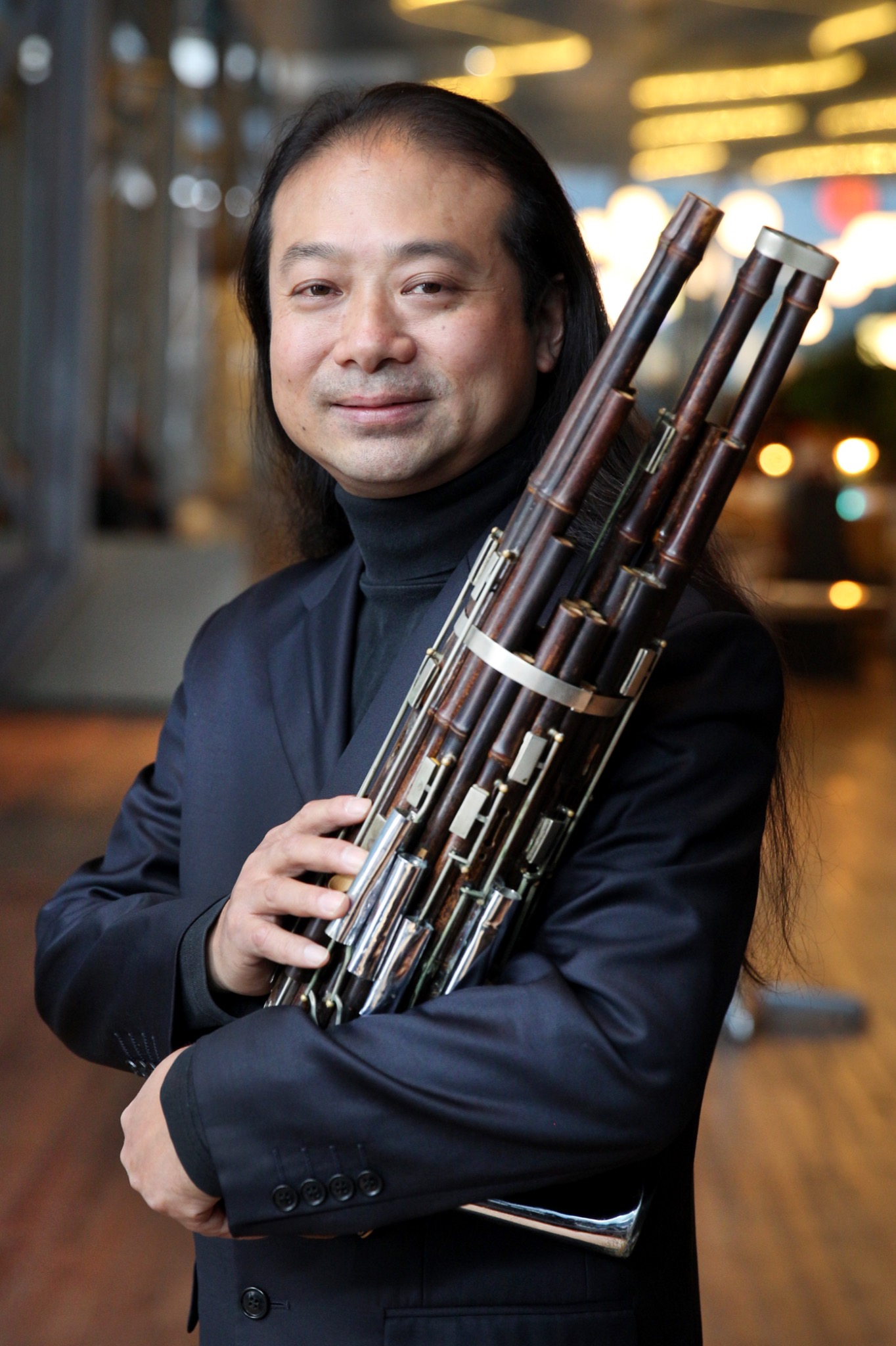
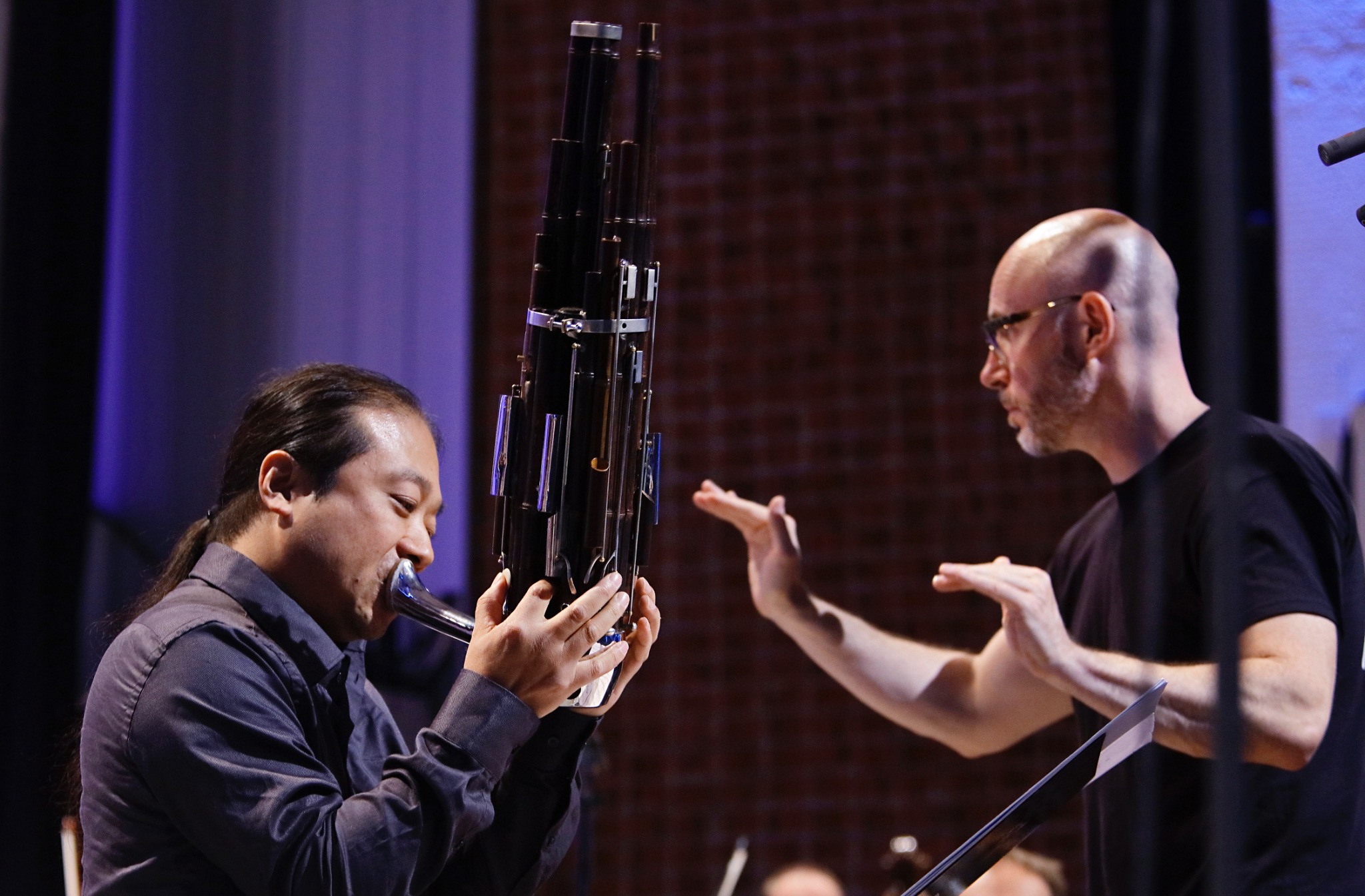
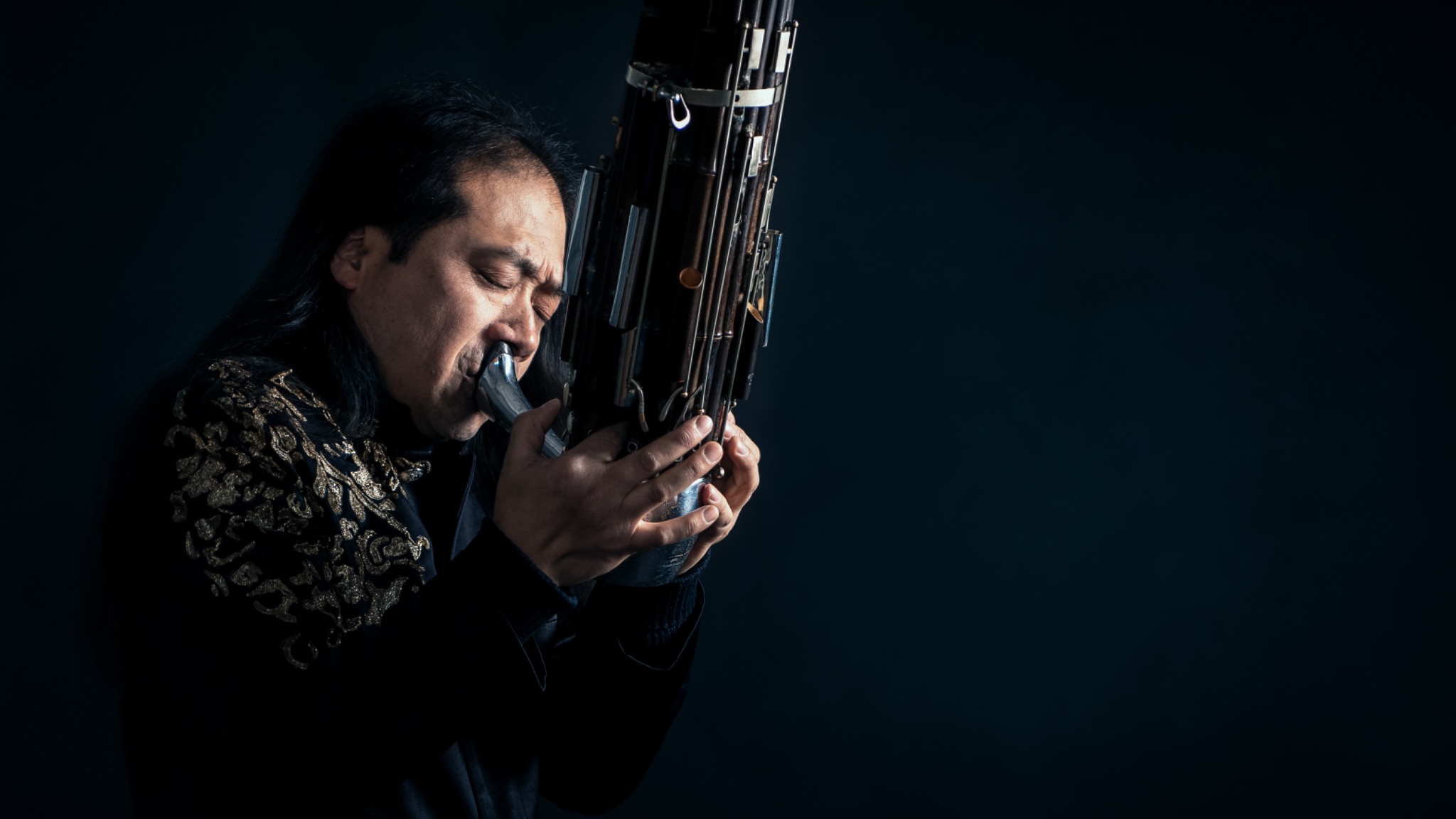
As early as the mid twentieth century, Albert Lord, the Harvard scholar of oral literature, discussed the place of improvisational expression in oral epic in his book The Singer of Tales, calling it “the singer’s art.” This capacity for improvisation makes such singers “creative artists of tradition.” What significance might such improvisational expression have for the development of folk music today? Wu Wei, the Germany based sheng virtuoso who has long worked to bring tradition into modern contexts and to place the sheng on the international stage through new music; Hong Wang, a Chinese American multi-instrumentalist and producer; Kui Dong, a tenured professor of composition at Dartmouth College devoted to contemporary music; and Na Zang, a scholar of art theory, all come from different backgrounds. In this online conversation, they share their views on a common question. The very form of this improvised dialogue also embodies a hope for music rooted in free expression, mutual listening, sincerity, and generosity.
Free Exploration, Inclusive Listening, Simple Sincerity: A Dialogue on Improvisational Expression and the Development of Folk Music
I. An Experiential Understanding of Improvisation
Dong: Mr. Wu Wei, how did you decide that you wanted to devote yourself to contemporary music? I know you have worked with composers from all over the world, including China, Japan, Korea, the United States, Canada, and many European countries.
Wu: I was influenced by all of you! After graduating from university, I joined the Shanghai Chinese Orchestra as a sheng soloist and ensemble player. I gave around three hundred performances a year, and the programs often felt the same. Time simply slipped by. In 1994 I met Hong Wang, who had founded Melody of China in San Francisco. That ensemble was not only preserving and developing traditional music, it was also doing many new things. I remember that the group commissioned many young composers, including Professor Dong. Hong Wang had many fascinating ideas. I was deeply moved and inspired.
Dong: In fact, many performers do not want to play Beethoven endlessly either. I know Irvine Arditti, who had once been concertmaster of the London Symphony Orchestra. At a certain point he no longer wanted to do the same thing all day long, so he returned to the string quartet he had founded as a student and devoted himself to contemporary music. I think performers like Wu Wei and Hong Wang are the kind who enjoy challenges and experimentation. They are not only dedicated to tradition but also actively seeking new paths.
Zang: Yes. Looking at your career, Mr. Wu, it is clear that you have kept exploring all these years. In 1995 you received the German government’s highest cultural exchange scholarship and went to Berlin for advanced study in jazz piano. That is a huge shift, from traditional Chinese music toward Western traditions. What led you to make that turn?
Wu: My real focus has always been the modernization and internationalization of Chinese traditional instruments. The story goes back to 1992, when a classmate and I founded what was then the first world music ensemble of its kind in China. That was my first encounter with improvisation. Before that, performers had to wait for composers to finish a score. Only then could they play. But through improvisation I discovered that music could be made without a score, and that performance itself could be joyful without waiting for a composer.
Our ensemble included both Chinese and Western musicians. At first things were wonderful and the thinking was very open. But later one member wanted to act as the “father” of the group, so that every question had only one answer in the end. That shut everyone’s mouths and minds. Trust among the musicians disappeared, and we were reduced to waiting for notation again. The space for musical growth became smaller and smaller. Since the original purpose of forming the ensemble had been lost, we eventually stopped. Still, that had been a wonderful period, and it showed me a new direction in music. Even then, while I was still in China, I already felt the desire to pursue it.
Wang: Improvisation in an ensemble like that depends on listening to one another. It requires response and dialogue. It is a very democratic process, and each person’s individuality matters. If one person becomes domineering, improvisation loses its meaning.
Dong: Exactly. The most important thing in collective improvisation is listening. Improvisation is built on that democratic foundation. If someone becomes overbearing, that destroys its very basis.
Wu: “Improvisation” is as unique as each person’s fingerprint. Because our personalities and backgrounds differ, our musical languages are also diverse. For musicians in Chinese traditional music, where monophonic lines predominate, a three dimensional concept of sound is often less developed. We may have studied piano, but our musical perspective can still remain limited. Improvisation helps us present modern sonic possibilities more flexibly. It can further open the ears of folk musicians and, on the basis of respecting what others are playing, allow trust and natural understanding to grow within the music.
This is a different world from composed music. A composed work is an architectural structure completed in advance by the composer, with a clear design. Improvisation, by contrast, is composition in real time according to how the music develops, so that both the sonic result and the musical form arise on the spot. It offers a far more flexible listening experience. Many classical musicians perform at a very high level, yet cannot improvise. In that case they are missing an antenna; they lack a certain connection to music as a whole. I think the two capacities are complementary.
I believe improvisation is an ability musicians in this century should possess. Many conservatories abroad already treat it as a required subject. Lucas Niggli, for example, is a wonderful percussionist. He never attended a conservatory; he was self taught and once studied with the Swiss percussionist Pierre Favre. Later, when a Swiss conservatory was hiring, they invited him to teach improvisation. He joked, “I’m just a street musician.” But he is truly remarkable. He told a funny story about how, in his first class, he asked a violinist to make unusual sounds using the back part of the bow. After the demonstration, the player immediately wiped down the violin, afraid it might be damaged. In other words, more traditional musicians often look down on improvisation. Yet after a semester, some of them gradually begin to enjoy improvising and to value self expression.
So if a musician has no capacity for improvisation, that musician loses a certain power, loses a personal perspective on music, and loses a voice within it. I especially admire Hong Wang for this. He has been involved in so many musical worlds, and that is not something one simply learns in a conservatory.
II. Improvisation in Folk Tradition and the Living Presence of Vital Spirit
Zang: Some writers have called you “the first person to successfully perform contemporary music, jazz, and improvisation on the Chinese sheng.” In other words, you emerged from tradition and then entered the modern world in search of more possibilities for folk instruments. From your present vantage point, you must have a broader understanding of the preservation and development of folk music.
Wu: There is much to learn from both Chinese and Western music. Very often, before we have truly learned Western traditions in depth, we start imitating them, and then the artistic conception of the work cannot reach a high level. I am not against learning from the West, but just as with our own traditions, it takes a long time to grasp the essence. Tradition especially requires lifelong devotion. In truth, we still know too little about our own traditions.
Wang: Wu Wei and I have always talked easily with one another over the decades because we share many of the same ideas. Tradition and modernity are not opposites, even if they differ in form. What is successful about Wu Wei’s work is not simply that he performs contemporary music, but that he brings traditional elements into contemporary works. Nor is it merely that he plays complex sounds. His playing inspires others to discover the traditional possibilities latent in the instrument itself.
Dong: This takes us immediately into a deeper topic. Modern society is facing a cultural crisis. The internet has accelerated self media, and American fast food style culture now spreads globally on the wings of media. A short video may last only a few seconds and attract attention with headline like immediacy. It does not aspire to become a classic or to endure.
Zang: We need a dialectical view of technological and media change. In some ways it has brought about a decline of cultural tradition. Culture becomes a fast moving consumer product, and people grow less patient in how they read, listen, and feel. From the perspective of cultural tradition, whether in the East or the West, this has had real effects. It is also a historical trend.
Dong: That is why many people are disappointed by fast culture and by the effects it has had on society. People now spend less and less time crafting works with care. They lose the patience for refinement. Is that not something worth reflecting on?
Wu: No matter how technology or forms of dissemination develop, cultural roots remain the most important thing. China has passed through so many dynasties to arrive where it is today. Its cultural depth is woven invisibly into people’s blood and spirit. That is the place we ultimately want to reach. Earlier Professor Dong mentioned the expressive richness and artistic color of Chinese instruments, and their enormous potential. In fact, some traditional artists already possess many “antennas,” especially in the improvisatory practices of folk musicians.
A Blind Abing improvised every day. Erquan Reflecting the Moon was only one passage drawn from his own ongoing playing. That is real art. Today we often see beautiful young women in elegant stage costumes performing Erquan Reflecting the Moon onstage. But when Blind Abing, dressed in rags, played it with utter simplicity, the force of his music far exceeded those polished performances.
Zang: The “antennas” you describe seem to mean a naturally formed capacity in folk artists to see things freely and broadly, and to grasp music more fully.
Wu: Exactly. As I said earlier, musicians today should have multiple perspectives and dimensions. In fact, these qualities already exist within traditional music.
Wang: On the question of improvisation in Chinese tradition, every country has its own forms of improvisation. In Chinese traditional music, even the notation is flexible. It records only the basic contour of pitch and rhythm rather than fixing everything quantitatively, leaving room for performers to improvise. Take Zhonghua Liuban, one of the famous Jiangnan sizhu pieces. As it circulated among folk musicians, many versions emerged. Even in Gan Tao’s Jiangnan Sizhu Music, numerous variants are documented. All of them came from folk musicians ornamenting and varying the piece spontaneously. In other words, the basic framework is the same, but actual performance requires improvisatory variation. That is also why Chinese culture, after passing through many dynasties and after so much damage to its heritage, can still regenerate. Its roots survive among the people, within human beings themselves. In my fieldwork, whenever different folk musicians played the same tune, each performance changed. Some things are very hard to notate, because they are alive.
I once visited an old musician named Maxibatu in Inner Mongolia. He had served as a musician to a Mongolian prince and was already ninety years old. When I first saw him lying in his room, his eyes had no focus at all. He lay there stiffly, and I thought we might gain nothing from the visit. I walked outside and sat there, rather disappointed. Then I noticed a horse head fiddle hanging on the wall. His elder brother Li Bo was also a player, so someone took it down and casually played a few phrases. To our astonishment, the old man climbed out of bed on his own, stood at the door, and held out his hand for the instrument. We were stunned. Then he sat down and played an urtiin duu related melody, and it shook us profoundly. Though he had been bedridden and confused, the moment he heard the sound he knew most deeply, he came back to life, took up the instrument, and the power of music revealed itself in his blood.
Zang: What do you think gave him the strength to rise from bed?
Wang: Spiritual force. Music was his life. It had already gone beyond bodily technique. That is the “living” thing in folk music, something revealed through improvisatory expression.
Wu: That is why the gaohu master Yu Qiyi once wrote, in a preface to a book on Cantonese music, that he had long resisted writing Cantonese music down, because Cantonese music is alive, and each of his performances differed from the last. He feared that once it was written down, it would become merely the music in a book. It is like landscape painting. Many people can paint mountains, rocks, and trees, yet only a few painters make you feel there is real spirit in the work. I think that is because their “antennas” are more open than others’; their vision is broader and more alive.
III. Returning to Life as Lived and Opening Music Education Across Dimensions
Zang: The “antennas” you speak of seem to be precisely the depth and vitality missing from fast food culture, the living quality that escapes standardization. Since these things already exist within Chinese artistic traditions and within the improvisatory practices of folk music, why do we now have to go back and search for them? How were they lost in the first place?
Wang: In present day folk music education, there is a problem of rigidity. For example, teachers tell students that a certain note must be played exactly this way, never more, never less. Students are allowed only complete imitation. They learn only to play from the score, and every student wants to perform fast pieces. Standards become quantified and fixed. The boundaries between fields are too clear, which limits students’ development in multiple dimensions. Real folk music has none of these constraints.
Wu: Some critics also classify music as refined high art versus vulgar popular art and assign folk music to a particular social stratum. That kind of classification itself narrows our vision and overlooks the intrinsic quality and living force of folk music. In truth, what we study in conservatories is only the outer layer. Many things must be cultivated over a lifetime through lived experience.
Wang: Remember the famous song The Grassland of Hulunbuir? Its composer Ulan Tuya is like a brother to me. He once said that because he was born in the Hulunbuir region, everyone around him, siblings, parents, grandparents, sang and played music every day. All the melodies were already in his mind. If someone asked him to write a song, he could jot one down on a napkin over the course of a meal. He has written hundreds of pieces. All of that entered his bloodstream from childhood.
Wu: That has everything to do with life. In the past, after meals in a yurt, singing and playing music were part of entertainment, which then rose into culture and finally entered the bones. To understand it, you have to soak yourself in that world. It is not a matter of a few days of tourism. You need to live with those people and experience what it means, for example, to endure snowstorms and feel a bond with the herd.
Wang: Huddling inside a yurt, freezing.
Wu: Yes, only after such experience can you understand what they are singing about. Otherwise you cannot grasp their feeling for the grassland, or even for the animals.
Another time I went to Zhengzhou for a national suona invitational competition. At Zhu Zaiyu’s tomb, hundreds and hundreds of suona players sounded their instruments together. It was overwhelming. There I met an old man from a family of wind and percussion musicians. He took a liquor bottle, crouched onstage, wiped his nose, and looked like a beggar. Then he played Meng Jiangnü Weeping at the Great Wall. My heavens, I felt I had never heard such music in my life. No translation was needed. There was an energy in his music that struck straight at the heart. Scholars might say these musicians only play at funerals and village rituals, but his music possessed a transcendent power that cannot be replicated.
Wang: That is music with soul. After hearing it, you feel they are playing with their whole bodies and their whole spirits, not striking a pose or simply carrying out a task. Otherwise how would that sobbing tone come into being? In funeral music, they push that emotional expression to its extreme. Behind it lies profound sorrow and feeling.
Wu: We always say our art is for the people, yet in reality it is very difficult to let someone who looks like a beggar go onstage. Television and the concert stage always beautify everything to the extreme. By then we are already far from real life. The essence of a culture is never as simple as it appears on the surface.
Zang: These cultural essences and the power of music come from direct experience of life. Yet now the transmission of folk music depends largely on quantified professional education and has separated itself from real life. How can we recover that spontaneous, heartfelt state? Is it still possible to find it again?
Wu: Fieldwork and large scale data collection on folk music are both useful. Decades ago, Hong Wang had already begun collecting folk music while I still knew very little about such work. He gathered thousands of folk songs and instrumental pieces. That is an enormous treasure house that can bring us back into tradition and immerse us in it.
Wang: We still need to open our vision and see more dimensions. In my field research I found that many things are still alive among the people; we simply do not pay enough attention. Many musicians have died and taken precious things with them, so timely collection and organization are essential.
At the same time, I believe this living quality will always exist. It has not disappeared; it has only changed and flowed elsewhere. When I look at platforms such as Kuaishou or Bilibili, I see many folk musicians there playing suona, guanzi, or sheng. They may be selling instruments, but they play extremely well. Many young people have found a sense of improvisation in these loose environments. For example, they may take a familiar pop tune, change its mode or inflection, and play it in a highly folk like style. Much of this emerges through experimentation in a relatively open environment. Self media has given folk musicians a space and a stage for expression. Even if the purpose is instrument sales, these living traditions have gained a certain room to survive.
Wu: So far we have spoken mainly about performance. In theatre, this living quality is even more demanding, because performance there is a more fully integrated art. Once in Shanghai I went to the countryside for a performance and heard a remarkable Peking opera actor playing Cao Cao. He sang alone in a grove of trees. With a single shout, it felt as if the whole forest trembled, as if with that one line of text the fate of an entire kingdom had been decided. How many years of practice and cultivation must it take to reach that level of distilled artistic language?
Zang: Many things like that cannot really be produced through conservatory training, can they?
Dong: Perhaps the collision of different viewpoints can throw off more sparks. You are saying that conservatory systems, to some degree, suppress the essence of folk music. But from the standpoint of a professor, anything taught in a school needs some system and some standards if it is to succeed. Suppose I were to establish a conservatory for folk music education and ask the two of you to serve as dean and vice dean. How would you design a system that could genuinely advance the transmission of folk music?
Wang: It would be like a room with twenty windows. We should not tell students that only one window shows the world. We should teach them how to see through all twenty windows. Education should help students explore rather than tell them, “It can only be done this way.” A piece like Erquan Reflecting the Moon can be polished from the undergraduate level all the way to a doctorate, but the chief task of education is to develop students’ thinking and show them different possibilities, not simply teach them to do one thing. Students may practice their instruments individually and then return for rehearsal as an ensemble. On top of that, they need room to develop their own responses. Teachers should teach methods, guiding students to discover through those twenty windows what they themselves want and what truly interests them. Over four years of university study, what students should mainly acquire is method, not merely skill.
Wu: The reason China established departments and conservatories for traditional music was to protect and develop it and to build an educational system. That was a good thing. But because of historical circumstances and cultural policy, folk music and conservatory style traditional music gradually became two different kinds of music. Folk music has slowly declined with the loss of its cultural language, changes in policy, and the development of the market economy. Meanwhile, after decades of development, conservatory based “traditional music” has formed its own format. Even when the material comes from folk sources, it is no longer really folk music. This academized “traditional music” is no longer traditional music at all, but rather a standardized form of Chinese art music, one that can survive in state supported conservatories.
But as the social atmosphere needed by folk music gradually disappears, folk music itself may also vanish, losing the source from which it can regenerate. It therefore needs support and protection even more. From ancient times to the present, many great works have arisen from the people, yet much of their wisdom is “understood by intuition rather than transmitted verbally.” There is a realm of selflessness there. Many pieces have no named author; you simply do not know who created them. So first we need large scale collection and organization of folk music data. Then we need to build a system by analyzing these works from different angles and breaking their wisdom into meaningful slices. Each of us has a limited viewpoint, but each viewpoint is different. Composers, performers, critics: if more people approach these cultural legacies from their own perspectives and analyze them in this way, a fuller picture will emerge. But that will require all of us to work together.
IV. Artistic Values of Free Exploration, Inclusive Listening, and Simple Sincerity
Zang: Could we say, then, that recovering the capacity for improvisation is a productive path for the contemporary transmission of folk music? Returning to the lived settings from which folk music emerged is one method, and large scale collection and organization is another. Mr. Wu Wei, your effort to bring folk music into new music would also be part of this, returning to musicians the power of independent expression.
Wu: Most performers are primarily trying to realize the composer’s ideas, though of course they may also bring a small part of themselves. But I believe that above all one must be an honest artist, honest and responsible toward the music one makes. This is not only a technical or artistic matter. As a human being, one also bears responsibility toward society and humanity. Performing music is a way of transmitting love to others.
The improvisation we have discussed in traditional music is only one aspect. For musicians in any era, improvisation can open many dimensions. If you do not compose, you can still use your instrument to express your ideas and convey your feelings. That is very important.
Dong: In fact, that brings us back to the very essence of sonic art. I am increasingly inclined to treat music as pure sound rather than first as some kind of ethnic music or as a particular instrument. The story Mr. Wu told earlier about the Peking opera actor’s single cry that shook him so deeply reveals exactly this human longing for sound. From my perspective, our attraction to music reflects a basic human pursuit of auditory pleasure. Music is therefore not merely something ethnic; it answers a human need. When you say that academies suppress what is most precious in folk music, I understand you to mean that a system centered too heavily on structures and standards can neglect the cultivation of each individual’s free search for sound.
Wu: The space for music is actually enormous, yet what any one performer can see is limited. In an orchestra, one often needs only to play one’s own part, functioning like a screw in a machine. But once I encountered improvisation, my ears opened. I began to care much more about what others were saying. Even when I myself am not playing, understanding what is happening can already be a great gain.
I remember very clearly when I first heard improvised music. I could not understand any of it. I had no idea what they were doing. That memory has stayed with me. In an orchestra before, I only needed to complete my own part. Now I am much more interested in the style and concept of the whole piece, in the totality of it. Sometimes while performing I even forget my own part and am moved by the work as a whole. I am no longer merely a screw, no longer just a player. That gave me a tremendous insight: there are no shortcuts in music. One has to make up for what one has missed. Once you become active rather than passive, music becomes part of your body. When you learn to respect and listen to others, your music can truly grow. This applies across fields.
In fact, Eastern and Western musical arts have many similarities and can illuminate one another. Jiangnan sizhu and Cantonese music, for example, also involve improvisatory ornamentation around a principal melodic line. The same kind of ornamental improvisation exists in Baroque music and in the folk music of many countries. So the right attitude is to reject the dross and absorb the essence.
Wang: It is always comfortable to speak with Wu Wei because he approaches art with an inclusive attitude and sees things from a more complete perspective.
Wu: In listening and exchange, you discover that many things are interconnected. I once knew a horn player who had performed more than a thousand contemporary works. Contemporary music is not always what performers themselves would choose; often they are simply one component within it, but they still must play the music accurately. Some of those works place performers under tremendous pressure throughout an entire concert. I once asked him how he maintained his state of mind and inner strength. He told me he kept himself in balance through physical exercise. On the day of a performance, he would usually cycle thirty or forty kilometers. That astonished me. He showed me his legs, full of muscles shaped by training. This made me realize the relationship between the body and music. We cannot ignore the body. Many psychological pressures can be addressed through physical exercise. That is true in many disciplines.
More than ten years ago, I took part in a modern dance project in France. I knew nothing about dance. In the past, a musician only had to play the score and express the music. But during those six months, because I trained with dancers every day, I came to understand that every discipline has its own language. Only on the basis of listening, dialogue, and exchange is it possible to create a new artistic language.
One elderly modern dancer from that time left a deep impression on me. She was already over eighty, yet she still danced every day and organized workshops every year, always continuing to learn. When she was with us, she was like a child, preserving a freshness of spirit. She said that for a dancer, the body is the instrument. When she walked, she felt her body extending endlessly, as if a long antenna rose above her head. She lived on a mountain in France with a cat. Her life was very simple, as pure as her love of dance.
Her simplicity and sincerity moved me deeply. Sometimes we approach music with opportunistic motives. I often tell my students to learn some slower pieces. If every sentence you speak is false, then moving your fingers quickly is useless; it does nothing for the development of music.
Zang: So whether we speak of returning to improvisation within tradition or of opening new spaces for tradition through improvisatory forms of new music, in the end we are moving toward values of sincerity, exchange, and inclusiveness.
Wu: That is the most fundamental thing. So when we discuss the modernization of Chinese folk music, we must still proceed with mutual respect and a willingness to learn from one another. Music itself should be the goal, rather than the market or academic judgment alone. Whether one draws on Eastern or Western artistic vocabularies, good work can emerge so long as one is willing to devote oneself to cultivating the soil.
Interviewee
Wu Wei: Musician based in Germany; leading modern sheng performer.
Originally published in Music Life, 2021, Issue 8, pp. 19–24.
中文原文
编者按
早在20世纪中期,哈佛大学口头文学研究学者阿尔伯特·洛德(Albert Lord),就曾在著作《故事的歌手》The Singer of Tales中揭示了“即兴表达”在口述史诗中的地位,并称之为“歌手的艺术”。这种即兴表达能力使这些歌手成为了“传统的创造的艺术家”,它对今日民族音乐的发展又有怎样的意义?旅居德国的笙演奏家吴巍多年来致力于将传统融入现代,以新音乐的方式将传统乐器推向国际舞台;旅美多元民乐演奏家、音乐制作人汪洪;致力于现代音乐创作的达特茅斯学院(Dartmouth College)终身作曲教授董夔;艺术理论研究者臧娜。他们背景不同,但用在线对谈的方式分享了对同一问题的看法,这种即兴对谈的方式也体现了对音乐艺术“自由表达、相互倾听、真诚包容”的一种期待。
自由探索、包容倾听、简单真诚:关于即兴表达与民族音乐发展的对谈
一、关于何谓即兴的经验性解读
董:请问吴巍老师,您是怎么决定一定要做现代音乐,我知道您曾经跟世界各国的作曲家合作,包括中国、日本、韩国、美国、加拿大、欧洲等国家的作曲家。
吴:我是受你们的影响啊!大学毕业后我加入上海民族乐团,担任笙独奏、合奏演员,每年有300场演出,节目好像都是一样的,时间一晃就过去了。1994年我认识了汪洪大哥,他当时在旧金山建立了民乐团Melody of China,这个乐团不只是继承和发展传统音乐,也有很多新的东西,我记得乐团当时委约了很多年轻作曲家来创作,包括董老师。汪洪有很多有意思的想法,我当时非常感动,很受启发。
董:其实,很多演奏家也不想没完没了地演奏贝多芬。我认识Irvine Arditti,他曾经是伦敦交响乐团的首席,琴拉着拉着不愿意拉了,觉得一天到晚总做这一件事没劲,所以又回到自己读书时组建的弦乐团,演奏现代音乐。我觉得像吴巍老师和汪洪老师这样的演奏家,属于喜欢挑战和尝试的人,他们除了专注于传统,还努力去拓展创新。
臧:是呀,看吴老师的履历,这么多年他也是不断探索一路走来。1995年您受到德国政府最高文化交流奖学金的资助,去柏林深造爵士钢琴专业。立足音乐领域,从民族到西方这么大的转变,其中有什么缘由呢?
吴:我的工作重点实际上是民族器乐的现代化和国际化。这要追溯到1992年,我跟一个同学建立了国内第一个世界音乐乐团,那是我第一次接触到即兴音乐。以前演奏者要等作曲家完成谱子才可以演奏,但是接触到即兴音乐我才知道,原来没有谱子也可以做音乐,原来不需要作曲家,演奏也可以很开心。
我们这个乐团有很多中国乐手,也有西方乐手。刚开始还不错,思路很开阔,后来乐队里有队员要做乐队的“爸爸”,搞得所有问题最后都只有一个答案,这就把大家的嘴巴封住了,脑子也封住了,乐手之间的信任没有了,大家就只能等谱子,这就使音乐的发展空间越变越小。既然组建乐团的初衷丢掉了,后来我们就没有继续下去。但是曾经有过一段非常棒的经历,这段经历让我看到了自己在音乐上有一个新的发展方向,当时在国内就有了这种尝试的愿望。
汪:这种乐团中的即兴音乐讲究乐手之间的互相倾听,在这个过程中要有反馈和对话,这是一个很民主的过程,每个人的个性很重要。如果有一个人很霸道,那就失去即兴的意义了。
董:大家一起做即兴音乐,最主要是互相听,即兴音乐就是建立在这种民主基础上的。如果有人很霸道等于是破坏了即兴音乐的根基。
吴:其实“即兴”就像每个人的指纹那样独一无二,每个人因为性格不同、背景不同,产生的音乐语言也是多样的。对于民族音乐家来说,由于民族音乐以单旋律为主,缺乏音乐的立体音响概念,虽然我们弹过钢琴,但对音乐的认识还是很片面。但“即兴”可以帮助我们灵活地展现现代音乐的音响,能够进一步打开民族音乐家的耳朵,在尊重他人演奏的基础上,彼此间在音乐中建立起自然的默契与信任。
二、民间传统的即兴表达与生命气韵的活态存现
臧:有文章评价吴老师是“用中国传统乐器笙成功地演奏现代音乐、爵士乐以及即兴音乐的第一人”。也就是说,您是从传统当中走出来的,然后投身到现代音乐当中去为民乐寻找更多发展的可能性。站在现在的这个立足点,您对民族音乐的传承和发展应该有更加全面的思考。
吴:我觉得中西方音乐里有很多东西要学。很多时候,我们对西方的东西还没有学得很到位的时候,就去模仿,作品的立意是很难达到一定高度的。我不反对学西方的东西,但就像学习本民族文化一样,需要花费很长时间才能得到真髓。尤其是传统需要我们用毕生精力去学习,我们对自己的传统了解得还是太少了。
汪:我跟吴巍这几十年非常聊得开,因为我们有共同的想法和理念。传统和现代,虽然形式上不同,但并不是对立的。我觉得吴巍成功的地方,不是说他去做了现代音乐,而是他把传统的东西融入到现代作品中去,也并不是说他演奏了很复杂的音,而是说他的演奏启发别人去挖掘这个的乐器所蕴含的传统的东西。
董:谈到这里一下子就进入到了比较深刻的话题。现代社会面临一种文化的危机,网络让自媒体发展得越来越快。你看tiktok火爆全世界,美国的快餐文化借着媒体的东风对全世界产生了很大的影响。一段短视频只有十几秒钟,用标题性的东西吸引眼球,它们不追求能够成为经典,流传于世。
臧:对科技的发展和传播技术的改变,确实要辩证看待,它在某种程度上带来了文化传统的衰微,文化成了快速消费品,人们越来越没有耐心去品读和感受。
吴:无论科技和传播形式如何发展,文化根基还是最重要的。中国经历了那么多朝代发展到现在,文化的底蕴是融入到每个人血液里面、精神里面的,是看不见的,也是我们最终想要去的那个地方。传统艺术中一些艺术家是有很多“天线”的,比如民间音乐家的即兴演奏。瞎子阿炳每天都在即兴,《二泉映月》就是他自流调当中的一段,这才叫真正的艺术。
汪:其实每个国家都有自己的即兴音乐,中国传统音乐的“即兴”从记谱法来看就十分灵活,只记录基本的音高和节奏轮廓,并不是定量化的,这就为表演者的即兴发挥留下了余地。很多民间音乐家演奏同一首曲子,每一次都有变化,有些东西很难用谱子记述下来,因为它们是活的。
三、回到生活现场与体系化音乐教育的多维度敞开
臧:我理解这里所说的“天线”就是快餐文化里缺少的底蕴和生命气息,也就是那种去模式化的活的东西吧。既然它们就存在于中国的艺术传统当中,存在于民间音乐的即兴表达中,那么现在为什么还要回过头去寻找?又是怎样失去的呢?
汪:从当下的民间音乐教育看,存在固化的问题。比如,这个音一定要这么吹,不能少吹、乱吹,只能这样做,不能那样做,要做到完整的模仿。学生只会照着谱子演奏,每个学生都想演奏快的曲子,评判标准量化、固化。学科界限太过清晰,限制了学生的多维度发展。真正的民间音乐是没有这些束缚的。
吴:还有一些评论家,将音乐归类为阳春白雪和下里巴人,把民间音乐归属为某一个阶层的艺术,这种归类本身就把人们的眼光放窄了,忽略了民间音乐自身的品质和生命的力量。其实我们在音乐学院里学的只是一些皮毛,很多东西是要用一辈子的时间去体验的,需要很长时间在生活中“养”出来。
汪:很多东西还存在于民间,只是我们缺乏关注。很多音乐家去世了,把好东西也都带走了,所以及时收集整理非常必要。自媒体给了民间音乐家一个表达的空间和舞台,虽然是以乐器销售为目的,但是这些活态的东西也获得了一定的生存空间。
董:我想不同观点的碰撞也许会溅出更多的火花。你们谈的是学院派在某种程度上抹杀了民族音乐。但是我从一个教授的角度看,任何东西要放到学校来教,没有一个系统和标准可能是不会成功的。假如我现在开设一个搞民族音乐教育的学院,请你们做院长和副院长,你们要怎样发展这样一个系统来推动民族音乐的传承呢?
汪:这就像一个房间里有20扇窗户,我们不能跟学生讲只有一扇窗户可以看到东西,而是要教会他们从20扇窗户里看到不同的东西。要教学生自己去探索,而不是“只能这样”。所以四年的大学教育,学到的主要应该是方法,而不是单纯的技能。
吴:中国为什么成立民族音乐系和学院,都是为了保护和发展民族音乐,也是为了建立教育体系,这是件好事情。但由于历史、文化政策等方面的问题,民间音乐和学院派民族音乐逐渐衍变为两种不同的音乐。首先是做好民间音乐的大数据采集和整理,然后要建立一个体系,把这些人的智慧通过对作品的分析从不同角度做切片整理。
四、自由探索、包容倾听、简单真诚的艺术发展观念
臧:可不可以这样理解几位老师的说法,探寻即兴表达能力的回归是推动民族音乐当代传承的有益路径。回到民间音乐产生的生活现场是一种方法,对民间音乐做大数据采集和整理也是一种举措。吴巍老师在开篇所说的将民乐带入新音乐之中的尝试,应该也是以此为目的,也就是还音乐人以自主表达的权力。
吴:大部分音乐家都是在尽可能地展现作曲家的想法,当然,也会有一点点个人的东西。但我认为,首先要成为一名诚实的艺术家,要对你做的音乐诚实、负责。这不只是技术层面和艺术层面要求,还有作为自然人对人类对社会的责任和担当,演奏音乐是一个为人类传递爱的过程。
董:这实际上回到了声音艺术的本体,我越来越倾向于把音乐作为纯声音来处理,而不是把它看做某种民族音乐或者乐器。吴老师刚刚提到的京剧演员的一声吼让他非常震撼,这就体现了人对声音的追求。从我自己的角度看,对音乐的靠近代表了人对听觉快乐的本能追求,所以音乐不单纯是一个民族化的东西,而是人类自身的需要。
吴:音乐的发展空间非常大,但作为演奏家能看到的维度又是有限的。接触到即兴音乐之后,才打开了我的耳朵,我开始更加尊重别人在说什么。当大家在共同做音乐的时候,就算我不演奏,但是听懂了,也是很大的收获。当你变得主动了之后,音乐就成为了你身体的一部分;当你学会尊重和倾听别人的时候,你的音乐才会有发展。
汪:我跟吴巍交流的时候很舒服,因为他是用一种包容的心态看待艺术,用更加完整的视角看事情。
吴:在倾听和交流的过程中,你会发现很多东西是相通的。每个行业都有自己的语言,只有在相互倾听、对话、交流的基础上,才有可能建立一种新的艺术语言。简单和真诚让我很感慨,我们有时候会带着一种投机的心理去面对音乐,我常对学生说要学些慢一些的曲子。假如你说的每一句话都是假的,那么手指动得再快也是没有用的,对音乐的发展没有什么帮助。
臧:所以不论是回归传统的即兴表达,还是用即兴的新音乐的方式来拓展传统音乐的发展空间,最终都是在向一种真诚的、交流的、包容的观念靠近。
吴:这是最根本的。所以当我们探讨中国民族音乐现代化这个问题的时候,仍然要本着相互尊重、相互学习的态度。以音乐自身为目的,而不是仅仅依靠市场或者学院派的评判。不管借用东方还是西方的艺术语汇,只要甘心奉献去培育这片土壤,都能出好东西。
被采访人:吴巍,旅德音乐家,现代派笙演奏家。
Originally published in Music Life, No. 8, 2021, pp. 19–24.
原载于《音乐生活》,2021年第8期,第19–24页。